Key Takeaways
- Google Ads reach patients who are already searching for a dentist. Results can start within days.
- Social media marketing builds trust and brand awareness over time. It takes longer but pays off long-term.
- Facebook Ads and Instagram Ads serve different purposes. Most practices get better results using both.
- Fast lead response and simple landing pages can help turn more clicks into booked appointments.
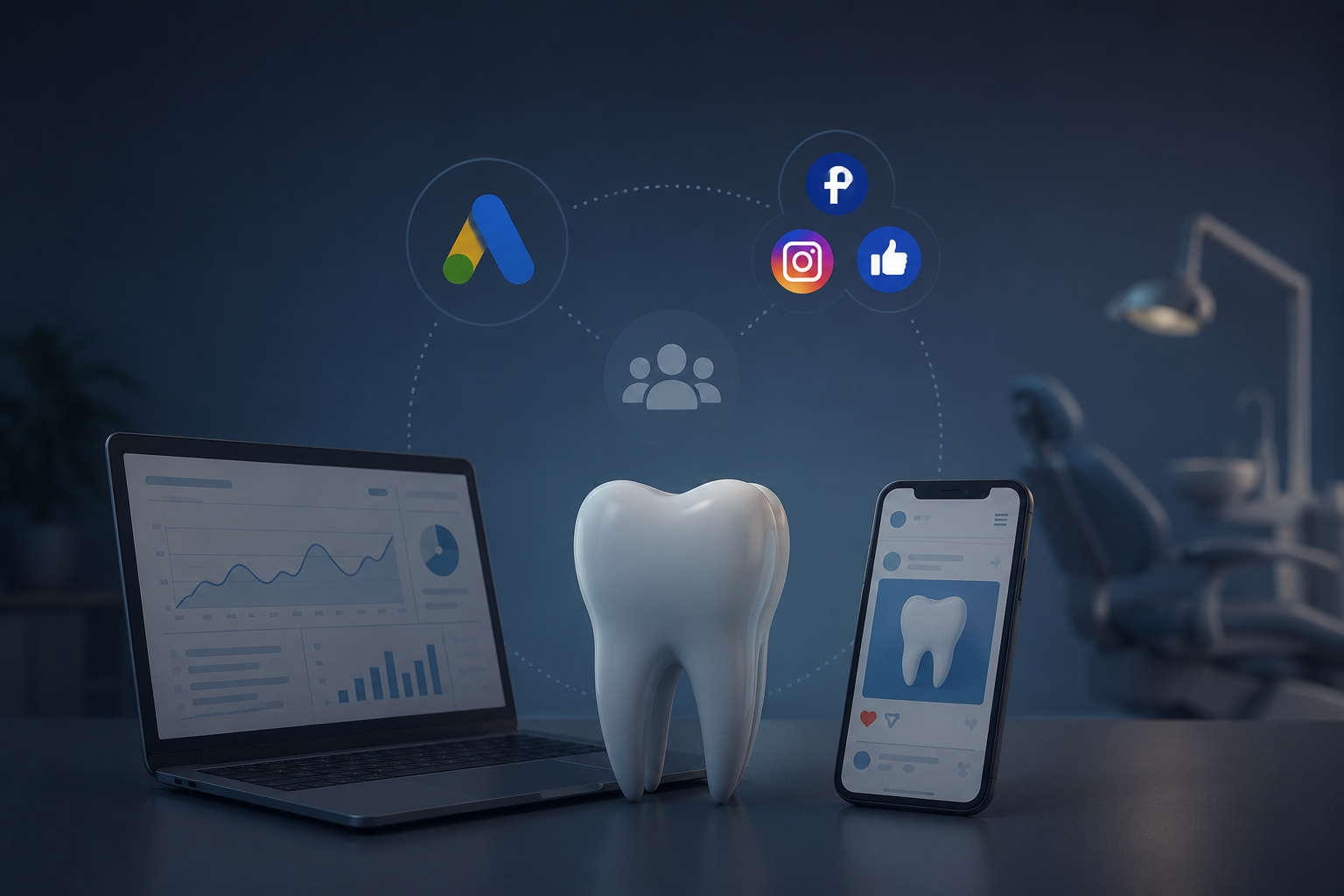
Getting new patients is one of the biggest challenges dental practices face today. Google Ads and social media marketing both help, but they work in different ways. Google Ads reach people who are already searching for a dentist. Social media builds trust with people before they even start looking. Used together, these two channels help dental practices generate more leads and turn those leads into booked patients.
Let’s discuss how each channel works and how to get the most out of both.
Why Dental Practices Need a Strong Patient Acquisition Strategy
Patients have more ways to compare dental practices than ever. They look at reviews, services, location, websites, and how quickly a practice responds. That’s why patient acquisition matters so much today.
A practice that relies only on referrals often struggles during slow months. Paid advertising gives the practice another way to bring in new patients. Google Ads and social media marketing help dental practices bring in new patient leads on demand. Each channel works differently, and knowing that difference is the first step to getting real results.
How Google Ads Help Dental Practices Get More Patients
Reach Patients Who Are Already Searching
Google Ads put a dental practice in front of people who are actively looking for a dentist. Someone searching “dentist near me” or “emergency dentist open now” already needs help. Search advertising captures that moment better than almost any other channel.
Target Local and High Intent Searches
Location matters a lot in dental advertising. Patients looking for urgent dental care are often more likely to choose a practice that’s close and easy to reach. Google Ads lets dental practices target local patients using location settings and radius targeting.
High-intent searches also convert better. Terms tied to services like emergency dentistry, dental implants, Invisalign, cosmetic dentistry, family dentistry, and teeth whitening tend to bring in more ready-to-book patients than general terms like “dentist.” Creating separate ad groups for each service usually works better than one big generic campaign.
Generate Leads and Appointment Requests
The whole point of a Google Ads campaign is to turn a click into a lead. That means every ad needs a clear call to action, whether it’s “Book Your Appointment,” “Call Now,” or “Request a Free Consultation.” Clear, direct ad copy usually gives patients a better reason to take the next step.
Once someone clicks, the landing page needs to make the next step obvious. A generic homepage won’t cut it. A dedicated landing page for the specific service in the ad, with a simple form and a visible phone number, keeps the lead moving forward instead of bouncing.
Reduce Wasted Ad Spend and Lower Cost Per Lead
Dental keywords can be expensive because practices compete for high-value local searches. Recent data shows the average cost per click for dental Google Ads is around $7.85, with a click-through rate near 5.44 percent, the lowest of any industry. Cost per lead for general dentistry usually falls between $50 and $84, depending on how well the campaign runs.
High-value services like implants and Invisalign often cost more per lead. That’s because these treatments have higher value and a longer research phase, which raises competition and bidding. That isn’t necessarily a problem. A more expensive lead can still be profitable when the treatment has a high value.
A few things tend to reduce wasted spend on Google Ads for dental practices:
- Adding negative keywords so ads don’t show for irrelevant searches like “dental assistant jobs” or “free dental clinic.”
- Using call tracking to see which keywords actually lead to phone calls, not just clicks.
- Refining geo-targeting so budget isn’t spent on searches from outside the practice’s service area.
- Pausing underperforming ad groups instead of letting them quietly drain the budget.
Cost per lead is a useful number, but cost per new patient tells the real story. A practice that connects call tracking data to actual booked patients often finds their real numbers look different from what the campaign report shows. That gap is worth paying attention to, since it directly affects return on investment.
A dental practice shouldn’t judge an ad campaign by clicks or leads alone. Track how many leads answer the phone, book appointments, show up, and become new patients. That gives the practice a much clearer picture of which campaigns are actually producing revenue.
Our PPC for Dentists service shows how we build and manage these campaigns for dental practices.
How Social Media Marketing Helps Dental Practices Attract New Patients
Build Brand Awareness and Trust With Local Audiences
Social media plays a different role than Google Ads. People don’t usually search for a dentist there. But regular posts, like team photos, patient testimonials, and before-and-after results, build familiarity. When someone finally needs a dentist, a familiar name often wins.
Generate Interest Through Facebook Ads
Facebook Ads help dental practices reach a wide local audience with strong targeting options. Facebook works well for services with a longer decision window, like family dentistry and general checkups. Lead form ads can also reduce friction, since patients can submit their info without leaving Facebook.
Generate Interest Through Instagram Ads
Instagram Ads help dentists generate leads through visual content. Before-and-after photos, smile transformations, and short videos perform well here. Instagram tends to attract interest in cosmetic dentistry, Invisalign, and teeth whitening.
So which social media platform is best for dental practices? Facebook can be useful for general and family dentistry, while Instagram can be especially effective for visual services such as Invisalign and cosmetic dentistry. For many practices, using both channels can work better than relying on one alone.
Our Social Media Marketing for Dentists service covers content and ad management across both platforms.
How Google Ads and Social Media Marketing Work Together
Capture Existing Demand With Google Ads
Google Ads work best when someone already knows they need dental care and is searching for a practice. This is why Google Ads tend to produce faster results than social media, sometimes generating leads within the first few days of a campaign going live.
Create and Nurture Demand Through Social Media
Social media builds trust before someone starts searching. This takes longer to show results, but it keeps the practice visible even when people aren’t actively looking yet.
Stay Top of Mind With Retargeting Across Both Channels
Not every website visitor is ready to book on the first visit. Retargeting fixes that. Someone who visited a landing page but didn’t book can later see a Facebook or Instagram ad. Someone who saw a social post can later see a Google ad when they finally search. That’s where using both channels can make a real difference.
Our Digital Marketing for Dentists page explains how these pieces fit into a full marketing plan.
How Dental Practices Turn Advertising Leads Into Patients
Send Traffic to Relevant Landing Pages
A generic homepage rarely converts as well as a landing page designed for the exact service in the ad. Someone who clicked an Invisalign ad wants to see Invisalign information, treatment details, and before-and-after photos, not a general homepage with ten different services competing for attention.
Landing pages that improve dental lead generation tend to share a few traits. They load fast. They have one clear call to action. They keep the form short, usually just name, phone number, and reason for visit. Keep the form as short as possible while collecting the information the practice actually needs.
Simplify the Path to Booking an Appointment
Every extra step between a click and a booked appointment loses leads. Online booking widgets, click-to-call buttons, and simple confirmation messages all help reduce that drop-off. A patient who has to hunt for a phone number or fill out a five-field form often just leaves instead.
Respond to Every Lead Within Minutes, Not Hours
Speed matters more than most practices think. Studies show that contacting a lead within five minutes makes a business about 100 times more likely to reach them and 21 times more likely to qualify that lead, compared to waiting 30 minutes. A fast callback process, along with strong online reviews, keeps leads from calling a competitor instead.
Google Ads vs Social Media Marketing: Which Should Dentists Use?
The answer depends on what a practice needs right now. Google Ads work best when a practice needs new patients fast and wants to capture people already searching. Social media works best for building trust over time, especially for visual services like cosmetic dentistry.
Google Ads make sense when a practice wants to capture existing demand and generate appointments sooner. Social media is more useful for building awareness and trust over time. Many practices can benefit from using both, but the right mix depends on their goals, budget, services, and local competition.
For more detail on how costs vary by service, this dental patient acquisition cost breakdown is a solid read.
Frequently Asked Questions
Should dental practices use Google Ads and social media marketing together?
Yes. Google Ads capture patients actively searching for a dentist, while social media builds trust and awareness with patients who aren’t searching yet. Together, they cover more of the patient journey than either channel alone.
How quickly can Google Ads generate new dental patients?
Google Ads can start generating leads within days of launch. Most practices see stronger, more consistent results after a few months of optimization.
How long does social media marketing take to produce dental leads?
Social media marketing usually takes longer, often a few months of consistent posting and advertising. This is because it builds trust and awareness rather than capturing immediate intent.
What type of Google Ads campaign works best for dentists?
Search campaigns targeting specific services tend to outperform broad generic campaigns. This includes services like emergency dentistry, implants, or Invisalign.
What type of social media advertising works best for dental practices?
Facebook Ads tend to work well for family and general dentistry. Instagram Ads tend to perform better for cosmetic services like Invisalign and teeth whitening.
How can landing pages improve dental advertising conversions?
A landing page for the exact service in the ad converts better than sending traffic to a general homepage. Keep the form short and include one clear call to action.
How quickly should a dental practice respond to an online lead?
Dental practices should respond as quickly as possible, ideally within minutes. Fast follow-up gives the practice a better chance of connecting with the lead before they contact another provider.
Can paid advertising help a new dental practice get patients faster?
Yes. Google Ads in particular can help a new practice build a patient base faster than relying on referrals alone. It reaches people actively searching for a dentist from day one.
How can patient testimonials help dental practices generate more leads?
Testimonials build trust before someone even contacts the practice. This trust makes them more likely to convert once they do reach out.
Can positive Google reviews improve patient response to dental advertising?
Yes. Strong reviews reassure a lead while they wait for a callback, and they can reduce the chance the lead contacts a competing practice instead.
To see how paid search and organic visibility work together long-term, check out our post on “How Do SEO and Google Ads Work Together for Dental Practices“ And for a broader look at our approach to local business marketing, visit our Digital Marketing Agency for Small Business page.