
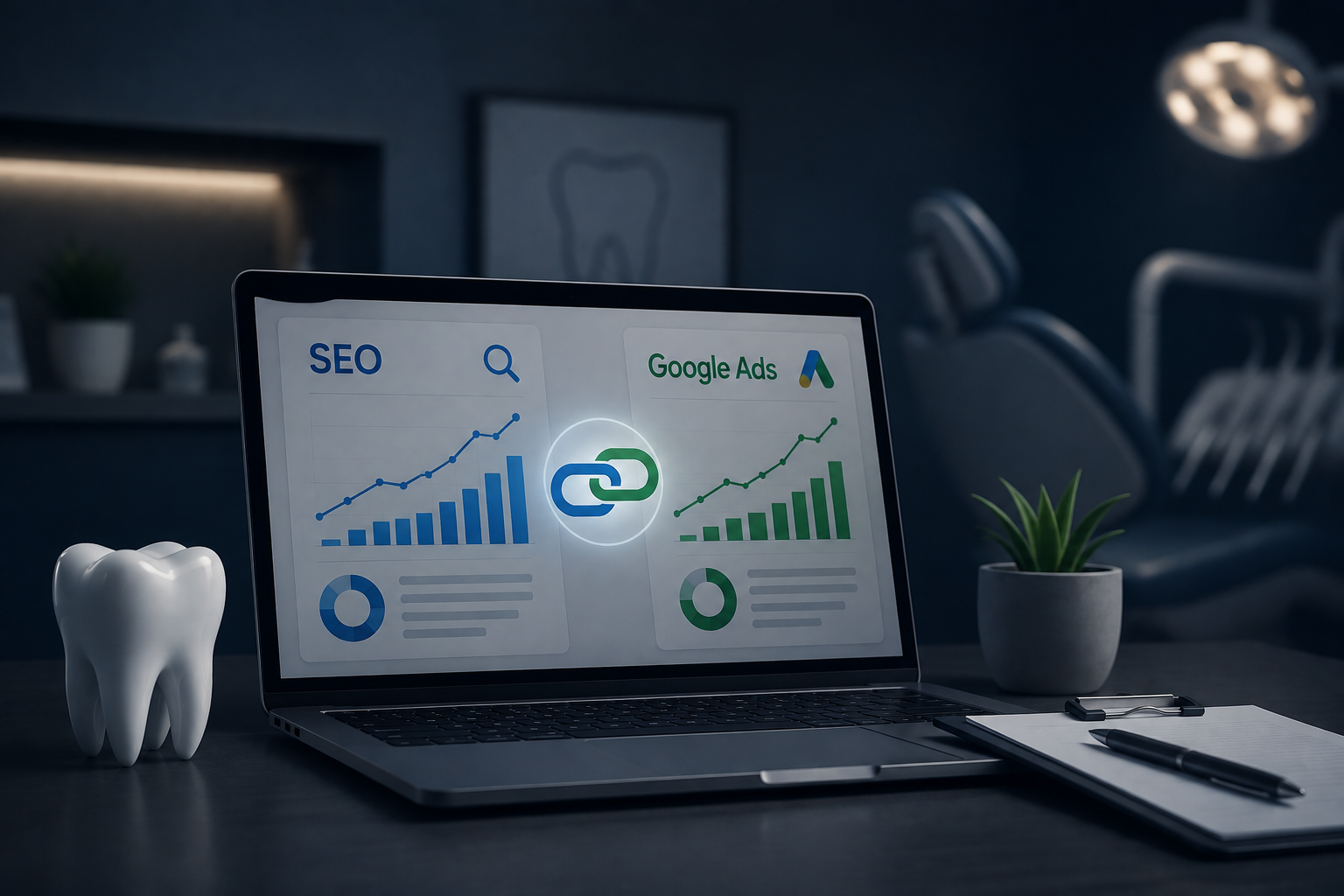
Key Takeaways
- SEO builds long-term visibility in Google Search and Google Maps, while Google Ads brings immediate traffic and appointment requests.
- Running both channels together often lowers overall patient acquisition costs.
- Google Ads data can guide keyword research for SEO, and SEO insights can improve Quality Score and lower CPC.
- Dental practices that appear in both paid and organic results tend to earn more trust and clicks.
- A combined strategy helps practices reach patients at every stage of their search journey, not just the ones ready to book today.
Most dental practices ask the same question at some point. Should we invest in SEO or run Google Ads? The truth is, understanding how SEO and Google Ads help dental practices grow isn’t about picking a side. It’s about using both channels in a way that supports each other. SEO builds visibility that lasts, and Google Ads brings in patients while that visibility is being built. Together, they give a dental practice a stronger, more balanced way to attract new patients month after month.
Why Dental Practices Should Use SEO and Google Ads Together
A dental practice that relies only on Google Ads gets visibility, but that visibility stops the moment the budget runs out. A practice that relies only on SEO gets long-term traffic, but it can take months to see real movement. Neither approach alone covers every gap.
When you combine both, you get coverage on two fronts. Google Ads fills the gap while SEO is still growing. SEO can reduce how much a practice relies on paid traffic over time. This is one of the biggest benefits of SEO and Google Ads for dental practices working side by side instead of competing for the same budget.
Many practices we work with come to us after trying one channel in isolation and hitting a wall. A Digital Marketing Agency for Small Business can help a dental practice map out where each channel fits, based on the practice’s goals, competition, and current online presence.
How SEO Helps Dental Practices Build Long-Term Visibility
SEO is the process of improving a website so it ranks higher in organic search results. For a dental practice, this means showing up when someone searches for a dentist, a specific procedure, or dental care in their area, without paying for each click.
Attracting Organic Search Traffic
Good SEO starts with keyword research. This means finding out what real patients are typing into Google Search when they need dental care. Terms like “root canal cost near me” or “family dentist accepting new patients” carry real intent. Once you know these search terms, you can plan your content around them.
Content marketing plays a big role here too. Blog posts, service pages, and FAQ content that answer patient questions help a website earn rankings over time. This content also supports Google Search Console data, which shows which queries are already bringing traffic and where there’s room to improve.
Building Local Search Visibility
Local SEO is arguably the most important piece for any dental practice. Most patients search for care close to home, and Google Maps results often get more attention than the organic listings below them.
A well-optimized Google Business Profile, consistent contact information across the web, and a steady stream of online reviews all feed into local rankings. Practices that neglect this often lose patients to competitors who show up first in the map pack, even if their care is comparable.
Working with a team that offers SEO for Dentists can help a practice build this local presence properly, instead of guessing at what Google rewards.
Creating Long-Term Patient Acquisition Opportunities
SEO becomes more valuable as your organic visibility grows. Once a page ranks, it can keep bringing in patient acquisition opportunities for months or years without extra ad spend. This is why SEO is often described as an asset. It compounds rather than resetting every time you pause your ad budget.
How Google Ads Help Dental Practices Get Patients Faster
Google Ads work differently. Instead of earning a spot in search results, you’re paying for one. This is called paid search, and it puts your practice at the top of the page almost immediately.
Reaching High-Intent Searchers
Google Ads reach people who are ready to act. Someone searching for “emergency dentist open now” usually isn’t browsing. They need help. Ads help you reach them before a competitor does.
Targeting Specific Dental Services and Locations
One advantage of PPC is control. You can create campaigns around specific services like Invisalign, dental implants, or teeth whitening, and target specific neighborhoods or cities. This level of targeting isn’t something organic SEO can offer as precisely, at least not right away.
Cost per click and click-through rate both play a role in how efficient these campaigns are. An organized account with tight ad groups and relevant landing pages can help improve Quality Score, which in turn lowers CPC over time.
Generating Immediate Leads and Appointment Requests
Google Ads can be especially useful when a practice needs faster results. A campaign can start generating traffic and appointment opportunities soon after launch. For a new practice, or one expanding into a new service, that speed matters. If you’re weighing whether paid search fits your growth plan, our post on Why Should Dental Practices Invest in Google Ads? How PPC Can Support Faster Patient Acquisition explains this in more detail.
A dedicated PPC for Dentists strategy also includes conversion tracking and call tracking, so you know exactly which ads are turning into booked patients, not just clicks.
How SEO and Google Ads Work Together
SEO and Google Ads can also share useful data. These aren’t just running side by side; they can actively improve each other when managed with that goal in mind.
Using Google Ads Data to Improve SEO
Google Ads campaigns generate a lot of search term data almost instantly. You can see exactly which phrases lead to calls or form submissions. That data can be valuable for SEO. Instead of guessing which keywords to target with content, you already have proof of what converts.
Using SEO Insights to Improve Google Ads
SEO can also provide useful insights for your ad campaigns. Pages that already rank organically often reveal which content resonates with patients and which offers get more engagement. That insight can shape ad copy, landing page design, and even which services get the biggest ad budget.
As Search Engine Land’s overview of SEO versus PPC and an integrated approach points out, treating these channels as connected rather than separate tends to produce stronger, more measurable results.
Reaching Patients at Different Stages of the Search Journey
Some patients search first and decide to book later. Some are just comparing dentists. Others are researching a procedure before deciding. SEO tends to capture these earlier-stage searches through informative content, while Google Ads catch the ones who are ready right now. Together, they can reach patients at several stages of the search journey, from early research to booking.
If you want a broader view of how these pieces fit into a full marketing plan, our guide on What Does a Digital Marketing Agency Do for Dentists? Services That Help Dental Practices Grow covers the other channels that often support SEO and Google Ads.
How SEO and Google Ads Can Increase Dental Practice Growth
Increase Search Visibility
When a practice ranks organically and runs ads for the same keyword, it can occupy more than one spot on the results page. This gives the practice more visibility and can increase the chances that patients notice the brand before clicking.
Generate More Qualified Patient Leads
Combining both channels usually means more consistent lead flow. Google Ads cover the gaps while SEO grows, so a practice isn’t stuck waiting months for the phone to ring.
Improve Conversion Opportunities
Conversion rate optimization matters just as much as traffic. A well-designed landing page, tested through PPC, can be applied to organic pages too. Small changes like clearer calls to action or shorter appointment forms can lift results across both channels. GA4 makes it easier to track these conversions and see which pages actually turn visitors into patients. For teams that manage broader campaigns, our Digital Marketing for Dentists services bring SEO, PPC, and conversion tracking together under one strategy.
SEO vs Google Ads for Dentists: When Should You Prioritize Each?
There isn’t one right answer here. It depends on where your practice stands.
If you’re a new practice with little to no online history, Google Ads can bring patients in while your SEO presence grows. If you already have steady organic traffic, doubling down on SEO content and local rankings might offer better long-term ROI. Many practices land somewhere in the middle, running both at once but shifting budget as SEO starts to perform.
A good rule of thumb is this. Use Google Ads when you need results this month. Use SEO when you’re building for the next few years. Most successful practices do both, just in different proportions depending on their stage of growth.
Frequently Asked Questions
Should dental practices use SEO and Google Ads at the same time?
Yes. Running both together usually delivers faster results and better long-term value than relying on just one.
Do dental practices need SEO if they are already running Google Ads?
Yes. SEO reduces long term dependence on paid traffic and keeps generating visibility even when ad budgets pause.
Do dentists need Google Ads if their SEO is performing well?
Often yes, especially for competitive keywords or new services where organic rankings haven’t caught up yet.
Can SEO reduce a dental practice’s dependence on Google Ads?
Yes. As organic rankings grow, practices can often lower ad spend without losing overall visibility.
Which is faster for getting dental patients, SEO or Google Ads?
Google Ads. Campaigns can start generating leads within hours of launch.
How long does dental SEO take compared with Google Ads?
SEO typically takes several months to show strong results, while Google Ads can generate leads almost immediately.
Can SEO and Google Ads increase dental appointment requests?
Yes. Used together, they reach more patients across different stages of the search journey, which increases overall requests.
How do Local SEO and Google Ads work together for dental practices?
Local SEO helps improve visibility in Google Maps and organic results, while Google Ads can provide additional paid visibility for location-based searches, increasing overall exposure.
How can dental practices reduce their cost per new patient?
Using SEO to bring in more organic traffic and Google Ads data to refine targeting can help dental practices lower their cost per new patient.
Can SEO and Google Ads help a new dental practice grow faster?
Yes. Google Ads bring in early patients while SEO builds a foundation that keeps generating traffic long after the initial push.